Everyone knows that littering is very harmful to environment, but one thing that can be forgotten is where the trash might end up. The trash that you might so carelessly throw out your window could very well end up in the ocean, and cause the death of several different kinds of marine life.
One of the most deadly kinds of trash that enters our ocean is plastic. Plastic unlike paper and cloth takes 400 years to biodegrade, and often sits on top of the water. Some of the common plastic that enters the ocean is plastic bags, plastic pellets, and drifting nets. These three things have very different effects on different animals. Plastic bags can appear to sea animals like sea turtles as jellyfish and when they go to eat them the bags can clog their intestines depriving their bodies of basic nutrients and eventually killing them. Plastic pellets appear as fish eggs floating on top of the water. Birds in turn will dive for and eat the pellets. Birds can also get caught in the drifting nets. Fisherman to catch fish uses drifting nets. When birds get caught up in them they can either starve to death or drown. When birds are caught in the nets and cut free this can create new problems. The bird could get caught in a tree or their legs and wings can get stuck. Mammals like seals and whales sometimes play with plastic. This can create huge gashes in their flesh, which they can die from. Seals often get the plastic stuck on their necks, which can cause strangulation.
As you can see trash in the ocean can create severe consequences for the marine wildlife. So next time you think about throwing your trash out just remember there are other animals out there that could greatly suffer.
As many people know if oil enters any body of water it is going to have a great effect on the on wildlife living in and around the body of water. What most people do not realize is that it is estimated that “706 million gallons of waste oil enters the ocean every year, with over half coming from land drainage and waste disposal. Offshore drilling and production operations and spills or leaks from ships or tankers typically contribute less than 8 percent of the total. The remainder comes from routine maintenance of ships (nearly 20 percent), hydrocarbon particles from onshore air pollution (about 13 percent), and natural seepage from the sea floor (over 8 percent).” (Oil Spills: Impact on the Ocean)
There are many immediate effects of an oil spill . For example oil spills have the potential to wipe out entire species of fish. When a large amount of a species of fish are extinct or almost extinct this has many effects of both humans and other wildlife. Fish are of great importance to the food chain. They essential to other aquatic life as well as land dwelling animals, like birds. One of the main problems with oil spills is the aquatic life that manages to live through is often effected by many long term problems. One of the most devastating is the oils effect on the reproductive systems. When oil is first spilled into the ocean it floats on the surface of the water, this effects many smaller organisms, like plankton, that fish feed off of. It also kills any fish eggs that also float on the surface of the water. Many other animals can become contaminated by eating other animals that are contaminated. SInce the reproductive systems are damaged the animals that are close to becoming extinct can not populate the area.
When birds and animals that have fur come in contact with the animals it kills the fur and feathers ability to insulate the animal. Which can cause many of them to die from hypothermia. Oil can also cause a bird to lose their ability to fly and their buoyancy, which hinders their ability to be able to land in the water, which cam cause the bird to drown. Animals with fur and feathers often try to clean the oil off of themselves by licking themselves. This causes the animal to directly ingest the oil. This can cause the animal to die immediately. But f it doesn’t it will effect the animals main organs eventually causing death. Animals like seals and sea lions can ingest the oil well they’re breathing, resting at shore, or by eating other contaminated species.
Some long term effects on birds and mammals are things like suppression to the immune system, skin irritation, organ damage, adrenal system damage, and damage to the behavior of the animal. Of all these effects can eventually cause death.
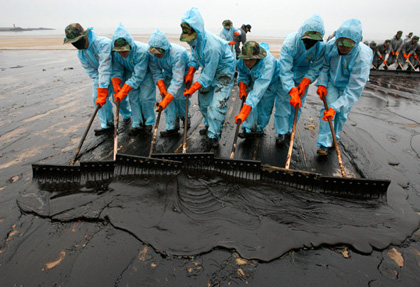
Oil spills have no positive effect on wildlife or any body of water. Many of the spills can be prevented. As long as people who own boats and cars dispose of the oil properly that will help greatly reduce the oil that enter the ocean yearly. Common people can’t be responsible for big oil spills like B.P. Oil spill, but we can help. We can help by helping rescuing animals, and with the overall cleanup. As long as everyone does there part we can reduce our out put.
Soil pollution is caused by the presence of xenobiotic (man-made) chemicals or other alteration in the natural soil environment, that has some detrimental effect on the soil. Some common causes of soil pollution are sewage leakage, and toxic chemicals. The most common toxic chemical that causes soil pollution is pesticides. One pesticide that infamous for its harmful effects on both people and animals is DDT (Dichlorodiphenyltrichloroethane.) DDT was first used to kill insects during World War II, we realized how well it worked killing insects that we started using it on crops to kill several different kinds of bugs, and some tropical countries used it to control mosquitos mainly carrying malaria. Some of the different species of birds that nearly went extinct due to the use of DDT were; Osprey, Eagles, Pelicans, Falcons, and Hawks. Once DDT enters the environment it takes a very long time for it to break down. It lingers in soil, water and animal tissues for a long time. Once a bird or any animal ingests DDT it then becomes stored in their body fat and slowly attacks the animal's nervous system. Birds often would eat smaller bugs that had been treated with DDT and then the bird would become affected. This would most likely move up the food chain. A bird eats a bug and then another predator eats the bird and so on. Since DDT is sometimes stored in the fat, a bird going through a period of time where it is low on food its body will use its stored fat to feed itself releasing the DDT that has built up in the fat, creating a fatal dose of the pesticide. DDT also causes problems with with calcium metabolism in birds, resulting in abnormal eggshells. Eggs become thin-shelled and won't allow the exchange of air for the developing embryo. Which can cause eggs break and embryos to die during the incubation period. DDT use was banned in America in 1972, but it is still being used in many tropical countries to kill insects that carry malaria and yellow fever. Although the U.S. has abandon the everyday use , DDT can still be used in times of emergency, and is still being produced to export to other countries.
Pollution has had a major effect on animals. One form of pollution is acid rain. Acid rain is precipitation, as rain, snow, or sleet, containing relatively high concentrations of acid-forming chemicals, as the pollutants from coal smoke, chemical manufacturing, and smelting, that have been released into the atmosphere and combined with water vapor: harmful to the environment. (dictionary.com) Acid rain effects plant life by stunting its growth, killing natural nutrients in the soil, and it kills the plants natural ability to withstand natural weather conditions. When the plant life is destroyed it makes it harder for animals to live. Also if the animals eat any plant affected by acid rain it will enter the animal’s body. Acid rain causes mercury and aluminum to leak from soil and rocks and then it can enter into lakes. This will greatly affect the fish living in the lakes. The mercury can poison fish, and could cause death. Acid rain can also affect a fish’s ability to reproduce. If the level of acid rain in a body of water reaches a certain level it causes the pH levels to decrease. If the pH level gets low enough it can kill everything living in the lake or body of water. When acid rain starts to affect aquatic life in a body of water it will also start to affect other species like birds, deers, or beavers. Birds who feed off of the fish or other organisms in the body of water would no longer have a food supply and either have to relocate or die. Beavers and deer who also could depend on the body of water for food, or water. In the deer’s case, could be poisoned by the contaminated water. When one animal is killed off it will then affect another animal, which will affect another and so on. This would go on and on through the food chain.

 One of the most deadly kinds of trash that enters our ocean is plastic. Plastic unlike paper and cloth takes 400 years to biodegrade, and often sits on top of the water. Some of the common plastic that enters the ocean is plastic bags, plastic pellets, and drifting nets. These three things have very different effects on different animals. Plastic bags can appear to sea animals like sea turtles as jellyfish and when they go to eat them the bags can clog their intestines depriving their bodies of basic nutrients and eventually killing them. Plastic pellets appear as fish eggs floating on top of the water. Birds in turn will dive for and eat the pellets. Birds can also get caught in the drifting nets. Fisherman to catch fish uses drifting nets. When birds get caught up in them they can either starve to death or drown. When birds are caught in the nets and cut free this can create new problems. The bird could get caught in a tree or their legs and wings can get stuck. Mammals like seals and whales sometimes play with plastic. This can create huge gashes in their flesh, which they can die from. Seals often get the plastic stuck on their necks, which can cause strangulation.